Retro Homes Digital Papers: A Practical Review of the 8-Piece Collection
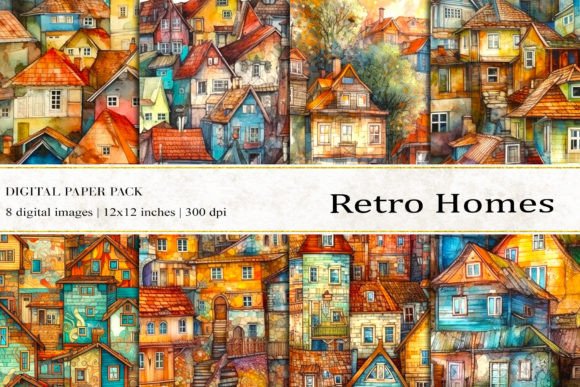
In the landscape of digital design assets, finding a set that balances aesthetic appeal with technical reliability can be challenging. Retro Homes Digital Papers enters this space as a curated collection specifically designed for creators who need vintage-inspired textures without compromising on resolution or versatility. This set comprises eight distinct backgrounds, each rendered in a 12×12 inch format at 300 dpi. While the visual style is nostalgic, the underlying utility is modern, making it a relevant tool for a wide range of professional and hobbyist applications.
The collection leverages generative art technology, created using Midjourney, to produce patterns that evoke mid-century domestic aesthetics. For designers, scrapbookers, and small business owners, the question is not just about the look, but how these files integrate into existing workflows. Below is an analysis of the strengths, practical applications, and considerations for anyone evaluating Retro Homes Backgrounds for their next project.
Technical Specifications and Quality Assessment
Before diving into creative possibilities, it is essential to understand the technical foundation of Retro Homes Digital Papers. The set includes eight high-resolution JPG files. The 12×12 inch dimension is the industry standard for scrapbooking and many print-on-demand services, ensuring compatibility with most major software platforms like Adobe Photoshop, Illustrator, Canva, and Procreate.
- Resolution: At 300 dpi, these images are optimized for print. This density ensures that when used for physical products like greeting cards, invitations, or fabric printing, the output remains sharp without pixelation.
- Format: The use of JPG format offers broad compatibility. Unlike PSD files which require specific editing layers, or PNGs which can sometimes have transparency issues depending on the printer, JPGs provide a universal "ready-to-use" solution for background layers.
- Consistency: Because the set was generated using a single AI model (Midjourney), there is a inherent visual cohesion across all eight papers. This consistency is crucial for projects requiring multiple pages, such as planner stickers or photo albums, where mismatched styles can disrupt the user experience.
While AI-generated art has advanced rapidly, some users remain skeptical about the texture quality. In this case, the Retro Homes Patterns demonstrate a sophisticated understanding of lighting and material depth. The images do not appear flat; they simulate the grain of aged paper, the sheen of vinyl, or the weave of fabric effectively enough to serve as convincing backdrops for mixed-media designs.
Practical Applications Across Industries
The value of Retro Homes Digital Papers lies in its adaptability. The aesthetic is versatile enough to bridge the gap between personal hobbies and commercial ventures. Here is how different professionals might utilize this asset library.
Digital Planners and Stationery Design
For educators and productivity enthusiasts creating digital planners, the 12×12 size is ideal. These papers can serve as cover pages, monthly dividers, or background textures for daily layouts. When combined with vector icons or typography, the retro aesthetic adds warmth and personality to otherwise sterile digital interfaces. The high resolution ensures that when users zoom in on tablets or print the pages at home, the details remain crisp.
Physical Product Creation
Small business owners selling on platforms like Etsy often rely on printable goods. This set is particularly well-suited for:
- Invitations and Greeting Cards: The vintage theme fits perfectly for weddings, baby showers, or holiday cards that aim for a nostalgic feel.
- Fabric Printing: With 300 dpi quality, these images can be licensed for direct-to-garment or textile printing, allowing entrepreneurs to create tote bags, pillow covers, or clothing lines featuring unique retro motifs.
- Home Decor: Creators can use these backgrounds as templates for framed wall art, mugs, or canvas prints.
Web Design and Social Media
Marketers and bloggers often struggle to find stock photography that aligns with specific brand identities. Retro Homes Backgrounds offer a cost-effective alternative to hiring a photographer for every blog post or social media campaign. They can be used as headers for newsletters, backgrounds for product showcases, or overlays for Instagram stories. The neutral yet textured nature of the patterns allows text to pop, improving readability and engagement rates.
Evaluating Usability and Workflow Integration
A common friction point in digital asset usage is file management and layering. Since Retro Homes Digital Papers are provided as standalone JPGs, they function best as base layers. Users looking for complex layering capabilities will need to import them into their preferred software and adjust blending modes (such as Multiply or Overlay) to achieve specific effects.
The generation method—Midjourney—introduces a unique characteristic: organic imperfection. Unlike vector-based patterns which are mathematically perfect, these images possess subtle variations in tone and texture. This is a strength for authentic-looking designs but a potential limitation for projects requiring strict geometric repetition. If your workflow demands seamless tiling for web backgrounds, you may need to perform minor touch-ups to ensure the edges match perfectly, though the natural variation often hides seams well.
From a usability standpoint, the file naming convention and organization are critical. Assuming the download package is logically structured, integrating these files into a project folder should be straightforward. However, because they are AI-generated, users should be aware that specific elements within the image (like a window frame or a piece of furniture) might occasionally lack structural logic if scrutinized closely. For background use, this is rarely an issue, but for close-up product shots, attention to detail is required.
Who Benefits Most from This Collection?
This set is not a one-size-fits-all solution, but it targets specific needs exceptionally well. It is particularly valuable for:
- Freelance Graphic Designers: Those needing quick, high-quality backgrounds for client projects who want to avoid the time-consuming process of photographing physical materials.
- Hobbyists and Crafters: Individuals engaging in digital scrapbooking, cardmaking, or collage work who appreciate the tactile feel of vintage homes without the mess of physical paints or papers.
- Publishers and Bloggers: Content creators looking to establish a consistent visual identity across their digital platforms with minimal asset overhead.
- Entrepreneurs: Small business owners launching brands centered around nostalgia, interior design, or lifestyle products.
Conversely, users seeking hyper-realistic architectural blueprints or strictly symmetrical industrial patterns might find the artistic interpretation of "Retro Homes" too stylized. The AI generation prioritizes mood and atmosphere over architectural precision, which is generally a positive trait for decorative purposes but less suitable for technical documentation.
Long-Term Value and Strategic Considerations
When investing in digital assets, long-term viability is key. The trend of "retro" aesthetics has shown remarkable staying power, cycling through various decades but maintaining a core appeal for warmth and authenticity. By purchasing Retro Homes Digital Papers, creators are acquiring assets that are likely to remain relevant for years, unlike fleeting trends based on current pop culture references.
Furthermore, the ability to use these images across multiple mediums—from screen to print—maximizes the return on investment. A single set of eight papers can fuel a month's worth of content for a social media calendar, support a line of printable stationery, or decorate a series of wedding invitations. The 300 dpi specification future-proofs the files, ensuring they meet the standards of high-end printers even as technology advances.
It is also important to note the ethical and legal implications of AI-generated content. As the market evolves, licensing terms for Midjourney outputs are becoming more standardized. Users should always verify the commercial rights associated with the specific purchase to ensure they can legally sell products made with these designs. Assuming the license permits commercial use, the efficiency gained by using pre-rendered, high-quality backgrounds outweighs the time cost of creating similar textures manually.
Final Thoughts on Implementation
Retro Homes Digital Papers represent a solid entry point for creators looking to infuse their work with vintage charm without sacrificing technical quality. The combination of 300 dpi resolution, standard dimensions, and cohesive AI-generated styling makes this set a practical resource for both novice crafters and seasoned professionals. While the reliance on generative AI means users must review the output for specific logical inconsistencies, the overall aesthetic impact is strong and versatile.
For those building a brand around nostalgia, planning events, or designing digital stationery, this collection offers a reliable toolkit. It simplifies the production process, allowing creators to focus on composition and messaging rather than texture creation. Whether used for web graphics, fabric printing, or personal scrapbooks, the Retro Homes Patterns deliver a level of polish that elevates the final product, proving that digital tools can effectively mimic the warmth of analog traditions.